
Sofa Bed Cable Management: Tidy Setup Guide
Stop tripping over tangled cords. Learn how to safely route, hide, and protect every cable around your convertible sofa — from charging ports to floor lamps — without damaging the folding mechanism.
Why cable management matters for sofa beds: A sofa bed is not a static piece of furniture. Every time you fold it out, the frame shifts, hinges rotate, and cushions compress. Cables that were neatly tucked away on day one can become pinched, stretched, or frayed within weeks. Proper sofa bed cable management protects both your electronics and the mechanism itself — and it keeps your living room looking intentional rather than cluttered.
The Hidden Risks of Poor Cable Management
Most people think of cable management as a purely aesthetic concern. In reality, a messy cable setup around a convertible sofa creates three distinct problems that can cost you money and safety.
1. Mechanism Damage
The folding and pull-out mechanisms on a pull-out sofa bed or fold-flat sofa bed rely on precise metal-on-metal movement. A single USB cable caught in the hinge track can bend a bracket, strip a screw, or jam the entire system. Repair costs for a damaged mechanism often run $150–$400, far more than the cost of a proper cable organizer.
2. Electrical Fire Risk
Frayed insulation combined with the friction of a moving frame is a genuine fire hazard. This is especially true if you use a sofa bed with USB ports or run power to a living room floor lamp behind the sofa. The U.S. Consumer Product Safety Commission reports that faulty cords cause thousands of residential fires annually.
3. Visual Clutter
Even if nothing breaks, a tangle of black cables against a light-colored linen sofa bed or velvet sofa bed undermines the entire room. Guests notice it immediately, and it makes even a well-designed living room styling setup feel unfinished.
Cable Routing Strategies for Every Sofa Bed Type
The right approach depends on your sofa bed's mechanism. What works for a stationary sectional sleeper sofa may fail completely on a futon sofa bed that folds daily.
| Sofa Bed Type | Recommended Routing | Critical Warning |
|---|---|---|
| Pull-Out Sofa Bed | Route cables along the fixed rear rail, then up the back frame | Never let cables cross the sliding mattress platform |
| Fold-Flat Sofa Bed | Use a service loop near the hinge with 4–6 inches of slack | Avoid tight zip-ties at the pivot point |
| Futon Sofa Bed | Clip cables to the wooden frame legs, away from the folding deck | Fabric sleeves can catch on the deck slats |
| Corner Sofa Bed | Run cables behind the corner seam using adhesive raceways | Do not block the corner storage compartment |
| Sofa Bed with Storage | Route along the top edge of the storage cavity | Keep cables clear of anything you store inside |
Essential Tools and Materials
You do not need a professional electrician's kit. A basic $25–$60 investment covers everything required for a clean, safe installation.
- Adhesive cable raceways (cord hiders): Rigid plastic channels that stick to the frame or wall. Best for permanent runs behind the sofa. Choose a paintable version if you want them to disappear against your wall color.
- Velcro cable ties: Reusable and adjustable. Far superior to zip ties for sofa beds because you can re-route cables when you rearrange the room.
- Spiral wrap or braided sleeving: Bundles multiple cables into a single flexible tube. Ideal for the power cord, lamp cord, and charging cable running to the same outlet.
- Under-furniture cable clips: Screw-mount or adhesive clips that hold cables flat against the underside of the frame.
- Cable management box: A covered box that hides the power strip and surplus cord length. Place it behind the sofa, not underneath the moving mechanism.
- Service loop: Not a product, but a technique. Leave a loose U-shaped loop of cable wherever the frame moves, so the cord has slack to extend and retract without tension.
💡 Pro Tip: The Service Loop Rule
Any cable near a hinge or sliding rail should have a loop at least 4 inches in diameter. This allows the full range of motion without pulling. Test it by fully extending and fully closing the sofa bed three times while watching the cable. If it tightens at any point, add more slack.
Step-by-Step Cable Management Installation
Step 1: Unplug Everything
Disconnect all power sources before you begin. This is non-negotiable. Work with the sofa bed fully extended so you can see the entire range of motion the mechanism will travel.
Step 2: Map Your Cable Routes
Identify every device that needs power or data: floor lamps, phone chargers, tablet stands, smart speakers, or a powered recliner. Group cables by destination. If you are also adding lighting, review our ambient sofa bed lighting guide for low-voltage options that reduce cable load.
Step 3: Install Raceways on Fixed Surfaces Only
Adhesive raceways should only attach to parts of the sofa that never move — the rear rail, the outer frame, or the wall behind it. Never attach a raceway to the folding deck or the sliding mattress platform. For wall-mounted options, consider pairing with wall-mounted reading lights to eliminate floor cables entirely.
Step 4: Create Service Loops at Every Pivot
Wherever a cable crosses a hinge, joint, or sliding rail, form a loose loop and secure it with a Velcro tie on both sides of the loop — never in the middle. This distributes stress and prevents the cable from pulling tight during operation.
Step 5: Bundle and Conceal
Gather parallel cables into a spiral wrap or braided sleeve. Route the bundle behind the sofa using the raceway. For the power strip, place it inside a cable management box on the floor behind the rear rail — not under the sofa where the mechanism travels.
Step 6: Test the Full Range of Motion
Open and close the sofa bed at least five times. Watch every cable. Listen for scraping, snapping, or tension sounds. If anything pulls tight, stop and add slack. This test is the single most important step — and the one most people skip.
Safety and Long-Term Protection
Cable management is not a one-time task. A sofa bed that gets used weekly will shift, and cables will migrate over time.
- Inspect quarterly: Look for frayed insulation, kinks, or cables that have slipped into the mechanism path. Check especially after guests have used the sofa bed.
- Avoid daisy-chaining: Never plug a power strip into another power strip behind a sofa. This is a common cause of overheating.
- Use surge protection: A surge-protected power strip protects your devices and adds a layer of safety. Choose a low-profile model that fits inside your cable box.
- Keep liquids away: If a spill happens near cables, disconnect power immediately. Our liquid spill cleanup guide covers the safe procedure for upholstery and electronics.
- Protect the upholstery too: Cables can snag on loose fabric. A fabric protector reduces friction and makes cleaning easier if dust accumulates around cable entry points.
Recommended Cable Management Products
The products below are selected for their suitability around convertible furniture — low profile, heat-resistant, and easy to reposition. Prices reflect current market rates.
Recommended Cable Management for Sofa Beds
⚠️ AFFILIATE DISCLOSURE: This website contains affiliate links. As an affiliate Associate, we earn from qualifying purchases. If you make a purchase through these links, we may receive a small commission at no additional cost to you. Read our full affiliate policy.

Under Desk Cable Management Tray No Drill, Metal Mesh Cable Management Under Desk with Clamp Mount, 2 Hole Cable Tray with Wire Management and Cord Organizer for Home Office Standing Desk
Check price on Amazon
Cable Management Under Desk, Enhanced up to 15 Cord Organizer 20 Pair-Black | Reusable, No Residue Left, Adjustable Hook and Loop Cable Ties, Wire Hider Under Table, Home Office Essentials
Check price on Amazon
Cable Management, 25.3'' Under Desk Cable Management Tray No Drill | Metal Cable Organizer with Clamp for Wire Management, Cord Organizer for Home Office, Desk Accessories Organizer, Black
Check price on Amazon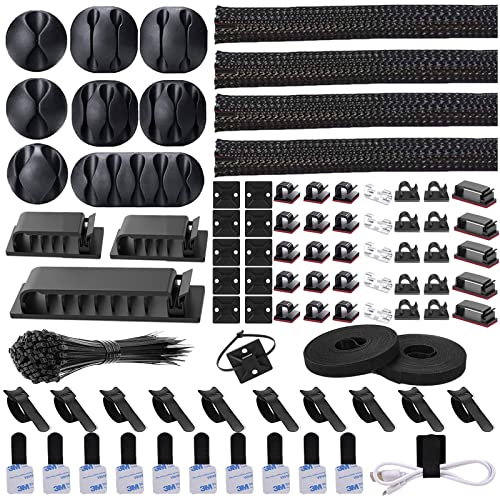
N NOROCME 192 PCS Cable Management Kit 4 Wire Organizer Sleeve | 11 Cable Holder,35Cord Clips 10+2 Roll Cable Organizer Straps,100 Fastening Cable Ties,for Computer TV Under Desk
Check price on Amazon
Adjustable Elastic Adhesive Cable Clips Wire Holder Cord Organizer 15 Pack | Black Under Desk Cable Management Clip for Home Office, Desktop, Behind TV, Wall, Phone Charger, USB, Ethernet, HDMI, PC
Check price on Amazon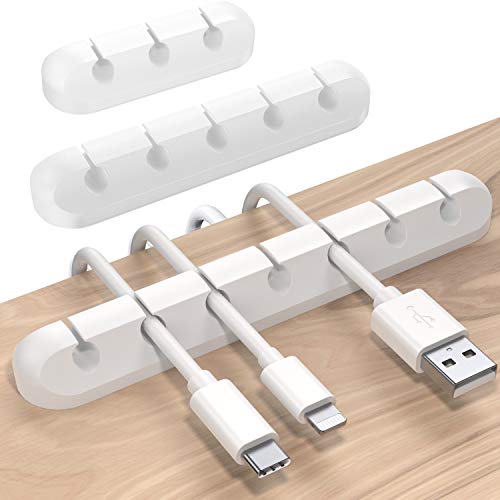
SOULWIT Cable Holder Clips, 3-Pack Cable Management Cord Organizer Clips Silicone Self Adhesive for Desktop USB Charging Cable Nightstand Power Cord Mouse Cable Wire PC Office Home
Check price on Amazon
Under Desk Cable Management Large, Cinati 16" Cable Management Box for Table Thickness up to 3", Wire Cord Organizer with Clamp No Drill, No Damage to Desk (Black)
Check price on Amazon
YECAYE Cable Management, 6 Pack, Black | Cord Organizer;Adhesive Mount;No-Drill Under Desk Wire Management;for Home Office;Baby proofing
Check price on AmazonMaking Cable Management Invisible
Functional cable management should not compromise your design. Here is how to integrate it seamlessly into your living room aesthetic.
- Match the wall color: Paintable raceways blend into any wall. This is especially effective behind a minimalist sofa bed where clean lines matter most.
- Use the sofa as camouflage: Run cables along the rear legs and behind the backrest. A oversized sofa bed with a deep back provides excellent cover.
- Coordinate with accessories: A catchall tray on a side table can hold a charging station, keeping cables off the floor entirely.
- Add organization inside storage: If your sofa has storage, use organizer inserts to keep spare cables and adapters separate from the main routing.
- Choose low-voltage lighting: Modern smart living room lighting often uses thin, low-voltage cables that are far easier to conceal than traditional lamp cords.
Frequently Asked Questions
Can I run cables under the sofa bed mattress platform?
No. The space under the mattress platform is exactly where the mechanism travels. Any cable routed there will be crushed or severed. Always route along fixed frame members instead.
How much slack should I leave at a hinge?
A loop of at least 4 inches in diameter is a good baseline. The correct amount depends on your specific mechanism — test by fully extending and retracting the bed while watching the cable. If it ever pulls tight, add more slack.
Are adhesive raceways strong enough for a sofa bed?
Yes, provided you attach them only to fixed, non-moving surfaces. Clean the surface with isopropyl alcohol first. For heavy cable bundles or high-traffic areas, use screw-mount clips instead.
What about a sofa bed with built-in USB ports?
Built-in ports already have internal wiring, so you only need to manage the single power cord. Route it along the fixed rear frame and keep it clear of the folding mechanism. Our sofa beds with USB ports guide covers the specific considerations for these models.
How often should I check my cable setup?
Inspect quarterly, and always after a guest has used the sofa bed. Cables migrate over time, especially in homes with pets or children. A two-minute check prevents expensive repairs.
Ready to complete your sofa bed setup? Explore our full collection of setup and accessories guides — from anti-tip straps to non-slip pads — and build a safer, tidier living space.
Explore Setup & Accessories →