
Solid Wood Frame Sofa Beds: Built to Last a Lifetime
Discover why solid hardwood frames outperform particleboard and metal alternatives. Learn which wood species, joint techniques, and construction details deliver the durability your convertible sofa truly deserves.
Shop Solid Wood Sofa BedsThe SofaBedPick Promise: A sofa bed is only as strong as its frame. While upholstery and mattress get all the attention, the hidden hardwood skeleton determines whether your investment lasts three years or thirty. This guide cuts through marketing jargon to show you exactly what separates a genuine solid wood frame from a glued-together impostor.
What Qualifies as a Solid Wood Frame Sofa Bed?
A true solid wood frame uses thick, kiln-dried lumber cut from a single piece of timber for the load-bearing components — the rails, legs, arms, and back posts. This is fundamentally different from engineered wood, which glues together wood particles or veneers, and from metal frames, which rely on welded or bolted steel tubing.
The distinction matters most at the joints. When you open and close a sleeper sofa thousands of times over its lifespan, the frame flexes. Solid wood handles that repetitive stress because its natural grain runs continuously through each piece. Engineered wood, by contrast, can crumble at screw points, and hollow metal tubing may dent or squeak over time.
If you are still deciding between frame materials, our upholstery and frame guide breaks down every option side by side. But if long-term durability is your priority, solid hardwood sits at the top of the hierarchy.
Best Wood Species for Sofa Bed Frames
Not all hardwood is equal. Furniture makers choose species based on hardness, grain stability, weight, and cost. Here are the four most common woods you will encounter when shopping for a solid wood frame sofa bed.
Oak
Exceptionally dense and shock-resistant, oak is the gold standard for heavy-use furniture. Red oak and white oak both hold screws firmly and resist warping. Expect to pay a premium — typically $1,200–$3,000 for a queen sleeper sofa.
Beech
A favorite in European furniture workshops, beech offers an excellent strength-to-cost ratio. It steam-bends beautifully, making it ideal for curved arms and shaped frames. Common in mid-range convertible sofas priced $800–$1,800.
Ash
Similar hardness to oak but with a more elastic grain that absorbs impact without cracking. Ash is lighter than oak, which makes the finished sofa easier to move. Often found in contemporary designs around $900–$2,200.
Pine
A softwood that works well for budget-conscious buyers. Pine frames are lightweight and affordable ($500–$1,200), but they dent more easily and may develop squeaks sooner than hardwood. Best for guest rooms with occasional use.
If you prefer a more rustic aesthetic, brands often pair pine or ash frames with distressed finishes to match rustic sofa bed designs. For sleek, clean lines, manufacturers tend to specify beech or oak under smooth upholstery in modern sofa beds.
Joint Construction: Where Frames Fail or Endure
Wood species matters, but joinery is what actually holds a sofa bed together. A poor joint in premium oak will fail faster than a decent joint in pine. Here are the joint types ranked from weakest to strongest.
- Butt joints with screws and glue — The most basic connection. Acceptable for low-traffic guest beds but prone to loosening over years of opening and closing.
- Pocket-hole joints — Angled screws create a stronger mechanical hold than simple butt joints. Common in mid-range furniture and a reasonable compromise.
- Dowelled joints — Wooden dowels plus glue create a reliable, long-lasting bond. You will find these in quality solid wood frames from reputable manufacturers.
- Mortise-and-tenon joints — The gold standard in woodworking. A rectangular tenon fits into a matching mortise, locked with glue and sometimes a pin. This joint has held furniture together for centuries and is what you want in a premium sleeper sofa.
- Corner blocks and braces — Added reinforcement at stress points. When you see corner blocks screwed and glued into a frame, it signals thoughtful construction.
Our sofa bed joint construction guide goes deeper into each method with diagrams and testing data. Before buying any solid wood frame sofa bed, ask the manufacturer which joinery they use. If they cannot answer, that is a red flag.
Solid Wood vs Metal vs Plywood: Which Frame Wins?
Each frame material has genuine trade-offs. The right choice depends on your budget, usage frequency, and design preferences. Here is an honest comparison.
| Factor | Solid Wood | Metal | Plywood / Engineered |
|---|---|---|---|
| Durability | Excellent — 15–30+ years with proper care | Good — 10–20 years, may squeak over time | Fair — 5–12 years, vulnerable at screw points |
| Weight | Heavy — difficult to move alone | Moderate — easier to reposition | Light — easiest to move |
| Repairability | Excellent — can be sanded, refinished, re-glued | Moderate — welding or replacement parts needed | Poor — often cannot be repaired once damaged |
| Price Range | $800–$3,500 | $500–$2,000 | $300–$1,200 |
| Aesthetic | Warm, natural, timeless | Industrial, modern, sleek | Depends entirely on veneer quality |
| Best For | Daily-use living room sofa beds | Modern apartments, frequent movers | Guest rooms, tight budgets |
If you want the industrial look with metal strength, explore our industrial sofa beds collection. If budget is the primary constraint, plywood frame sofa beds can serve occasional-use guest rooms adequately. But for a sofa bed that doubles as your primary couch, solid wood is the safest investment.
Advantages and Drawbacks of Solid Wood Frames
✓ Advantages
- Outstanding structural longevity — often outlasts the upholstery
- Resists the flexing stress of repeated open-and-close cycles
- Can be repaired, refinished, and reupholstered indefinitely
- Naturally dampens noise better than hollow metal frames
- Holds screws and hardware securely for decades
- Adds warmth and authenticity to any living space
✗ Drawbacks
- Significantly heavier than metal or plywood alternatives
- Higher upfront cost — often 30–60% more than engineered wood
- Can warp or crack if exposed to excessive moisture
- Requires more careful handling when moving
- Not all "solid wood" claims are genuine — verify species
How to Verify a Solid Wood Frame Before Buying
Marketing language is loose. "Solid wood frame" can technically describe a frame made of glued wood particles. Here is how to confirm you are getting genuine hardwood.
- Ask for the species name. "Solid wood" is not enough. A reputable seller will say "kiln-dried beech" or "northern red oak." If they cannot name the species, assume it is a low-grade softwood or composite.
- Request a spec sheet. Look for terms like "hardwood," "kiln-dried," and specific joint types (mortise-and-tenon, dowelled). Vague terms like "wood frame" or "engineered hardwood" are warning signs.
- Check the weight. Solid hardwood sofa beds are noticeably heavy. If a queen sleeper sofa weighs under 150 pounds, the frame is likely not solid hardwood throughout.
- Inspect joints if buying in person. Lift the cushions or flip the sofa. Look for visible dowels, corner blocks, and tight-fitting joints. Staples and screws alone are a budget signal.
- Read the warranty. Frame warranties of 10 years or more usually indicate genuine solid wood construction. One-year frame warranties suggest engineered materials.
For a broader set of pre-purchase questions, consult our first sofa bed checklist and common buying mistakes guide.
Protecting Your Solid Wood Frame
A solid wood frame is an investment. With minimal care, it will outlast every other component of your sofa bed. Here is what matters most.
- Control humidity. Wood expands and contracts with moisture. Keep your living room between 40–60% relative humidity. In dry climates, a humidifier prevents cracking. In humid climates, a dehumidifier prevents warping and mold.
- Keep it out of direct sunlight. UV rays dry out wood and cause fading. If your sofa bed sits near a window, use curtains or blinds during peak sun hours. Our sun fade protection guide covers upholstery and frame protection together.
- Address spills immediately. Liquid that seeps into joints can weaken glue bonds. Blot and dry thoroughly — see our liquid spill cleanup guide for the correct technique.
- Tighten hardware annually. Screws and bolts loosen over time. A yearly check with a screwdriver prevents wobble and extends frame life. Our hardware upgrade guide shows how to replace worn bolts with higher-grade options.
- Use felt pads. Protect hardwood floors and reduce stress on legs when the sofa bed is repositioned. Felt pads are inexpensive insurance.
If your frame develops a squeak, do not ignore it. Our mechanism repair guide helps diagnose whether the noise comes from the frame, the hinge, or the mattress support system.
Who Should Choose a Solid Wood Frame Sofa Bed?
This frame type is not for everyone. It makes the most sense if you fall into one or more of these categories:
- Daily sleeper users. If your sofa bed is your primary couch and gets opened multiple times per week, solid wood absorbs that punishment far better than alternatives.
- Long-term homeowners. If you plan to keep the same sofa for 10+ years, the higher upfront cost pays for itself many times over.
- Design-conscious buyers. Solid wood frames pair beautifully with linen upholstery and velvet upholstery, creating a piece that looks and feels premium.
- Those who value repairability. A solid wood frame can be reupholstered and refinished. A reupholstery project gives your sofa a second life instead of sending it to landfill.
On the other hand, if you move frequently, live in a small studio apartment, or need a budget guest bed used twice a year, a lighter and cheaper frame may serve you better. Explore small sofa beds and affordable picks for those scenarios.
What Should You Expect to Pay?
Solid wood frame sofa beds span a wide price range depending on species, joinery, size, and upholstery. Here are realistic market prices:
- Budget solid wood (pine or rubberwood): $800–$1,400 — suitable for occasional guest use
- Mid-range (beech, ash): $1,400–$2,500 — the sweet spot for daily-use living room sofa beds
- Premium (oak, walnut): $2,500–$4,500+ — heirloom-quality construction with mortise-and-tenon joinery
Prices fluctuate with promotions and fabric choices. Check our sofa bed deals guide for timing tips, and compare across mid-range picks and high-end collections before committing.
Frequently Asked Questions
Is a solid wood frame really worth the extra cost?
If you use your sofa bed regularly, yes. A solid wood frame typically lasts two to three times longer than engineered wood, and it can be repaired rather than replaced. Over a 15-year period, the cost per year of use is often lower than buying two cheaper sofa beds.
What is the best wood for a sofa bed frame?
Oak and beech are the top choices for durability and screw-holding strength. Ash is an excellent lighter alternative. Pine works for budget or occasional-use furniture but dents more easily. Avoid unknown "hardwood" labels without a species name.
How can I tell if a frame is solid wood or particleboard?
Weight is the quickest test — solid wood is heavy. Also look at unfinished areas underneath: solid wood shows continuous grain, while particleboard looks like compressed sawdust. Ask for the species name and joint type in writing.
Do solid wood frames squeak?
They can develop squeaks if joints loosen or if the mechanism needs lubrication. Unlike metal frames, wood squeaks are usually fixable by tightening hardware or applying a wood-safe lubricant at the joint. See our hinge repair guide for step-by-step fixes.
Can a solid wood frame sofa bed be used every day?
Yes — that is exactly what they are designed for. Daily folding and unfolding stresses the frame, and solid hardwood handles that cycle far better than particleboard or thin metal tubing. Pair it with a quality memory foam mattress for the most comfortable daily setup.
Recommended Solid Wood Frame Sofa Beds
⚠️ AFFILIATE DISCLOSURE: This website contains affiliate links. As an affiliate Associate, we earn from qualifying purchases. If you make a purchase through these links, we may receive a small commission at no additional cost to you. Read our full affiliate policy.
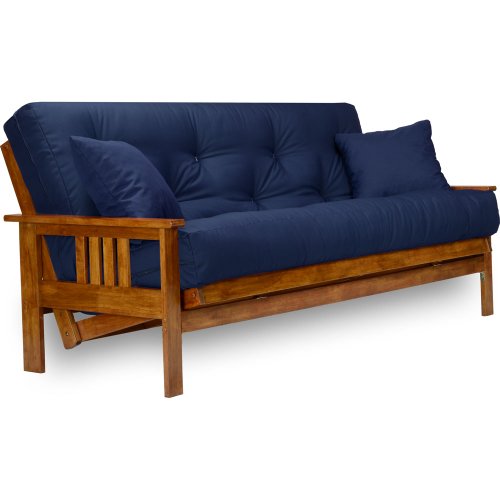
Nirvana Futons Stanford Futon Set - Full Size Futon Frame with Mattress Included (8 Inch Thick Mattress, Twill Navy Blue Color), Heavy Duty Wood, Popular Sofa Bed Choice
Check price on Amazon
Stanford Futon Frame - Full Size, Solid Wood | Heavy Duty Solid Wood | Transform to 3 Positions - Sofa, Lounger, Bed | Popular Design (Frame Only)
Check price on Amazon
Kodiak Furniture Carson 75" Traditional Full-Size Wood Futon Frame, Solid Pine Construction, Assembly Required, in Java Brown Finish
Check price on Amazon
AFI, Cambridge Wood Daybed, Twin, Walnut
Check price on Amazon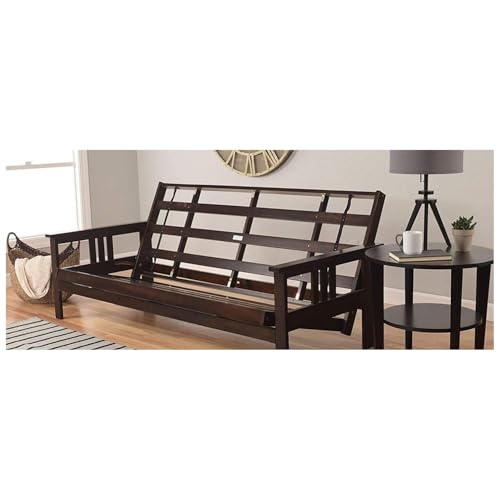
Queen Size Wood Futon Frame, Antique Finish Frame Only/Espresso | Queen size, solid wood construction, converts from sofa to bed, guest room furniture
Check price on Amazon
KOMFOTT Wood Daybed Frame Twin Size, Sofa Day Bed Frame with Wooden Slats Support, No Box Spring Needed, Twin Daybed Frame for Bedroom Living Guest Room (Mattress Not Included)
Check price on Amazon